Hurricane-resistant construction in The Bahamas, built above code
New builds, retrofits and post-storm rebuilds engineered for a continuous load path — designed to weather the Atlantic season, not just pass inspection.
Hurricane-resistant construction in The Bahamas means a continuous load path
Hurricane-resistant construction in The Bahamas is not a feature you add at the end — it's a load path you design from the foundation up. Taurus builds and retrofits hurricane-resistant homes across Nassau and rebuilds after storm damage, engineering the connection from roof to wall to foundation so the wind can't peel the building apart.
We design and build above the Bahamas Building Code's hurricane requirements as standard. That means strapped and clipped roofs, reinforced openings, impact-rated or shuttered glazing, and concrete and steel detailed for Category 4–5 wind loads. For existing homes, we retrofit the weak links; after a storm, our crew can secure, document and rebuild.
When the next system spins up in the Atlantic, the difference between a home that holds and one that doesn't is almost always the unglamorous detail: the straps, the fasteners, the continuous connection. That's the part we don't compromise.
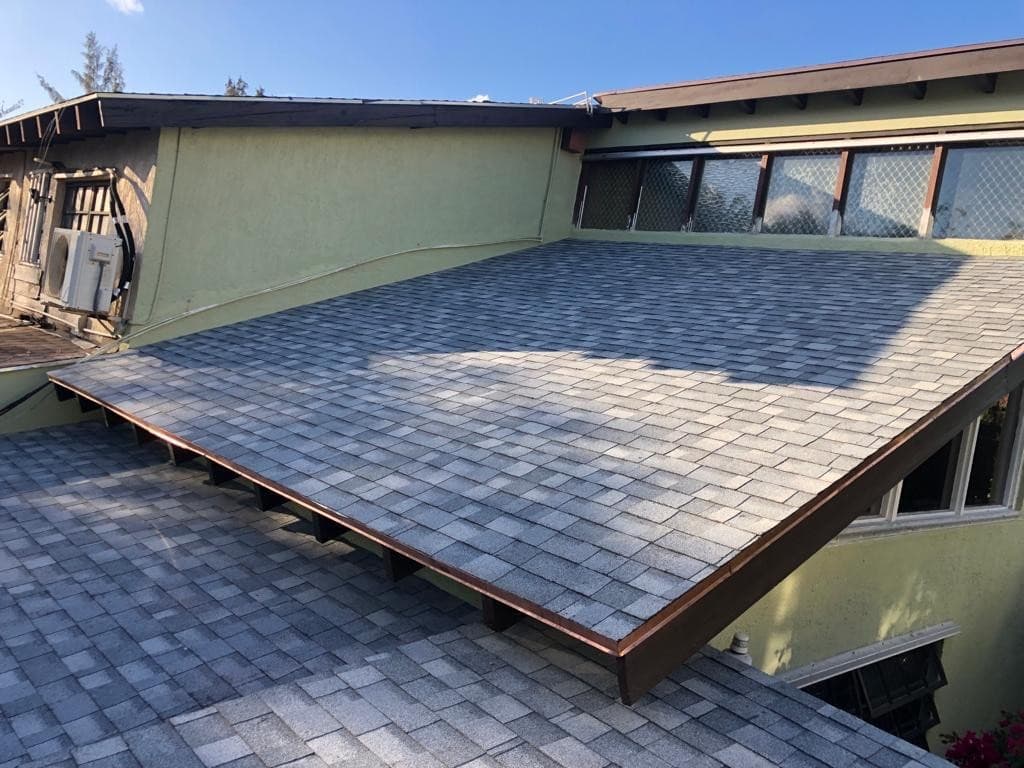
What makes a build hurricane-ready
Continuous load path
Roof, wall and foundation tied together so uplift and lateral loads transfer all the way to the ground.
Code+ as standard
We engineer above the Bahamas Building Code's wind spec by default, not as a premium upgrade.
Protected openings
Impact-rated or properly shuttered windows and doors — the openings are where storms get in.
Storm-response crew
After a system, we can tarp, secure, document for insurers and rebuild — one call, fast.
How we build for the storm
Assess risk
We assess exposure, elevation and the weak links — for a new build or an existing home's retrofit.
Engineer the path
Design the continuous load path: foundation, structure, roof tie-down and protected openings.
Build to code+
Strap, clip, reinforce and fasten above code, with the right materials for salt and wind.
Document
We document the build for your insurer and hand over a home detailed to weather the season.
Why Bahamian homes need more than mainland code
The Bahamas sits squarely in the Atlantic hurricane corridor, and recent storms have shown what happens to buildings that were detailed to the minimum. A Bahamian roof needs more straps than a Florida one; openings need real protection; and the load path has to be continuous from the ridge to the footing, or the weakest connection decides the outcome.
We've spent years on Bahamian sites both building new and putting buildings back together after the wind. That experience shows up in the details a checklist misses — how salt corrosion weakens fasteners over time, where wind-driven rain finds its way in, and which connections fail first. For storm damage repair and rebuilds, we secure fast, document thoroughly for insurers, and rebuild stronger than what stood before.
Frequently asked questions
What makes a home hurricane-resistant in The Bahamas?
A continuous load path — roof strapped and clipped to walls, walls tied to a sound foundation — plus protected openings and corrosion-resistant fasteners. It's engineered from the foundation up, not added at the end.
Can you retrofit my existing home to be more hurricane-resistant?
Yes. We assess the weak links — roof tie-downs, openings, structural connections — and retrofit them toward current code. It's often done alongside a renovation or re-roof.
Do you do storm damage repair and rebuilds?
Yes. Our crew can tarp-and-secure quickly after a storm, document the damage for your insurer, and carry out the full rebuild.
Do you build above the Bahamas Building Code?
As standard. We treat the code's hurricane requirements as the floor, not the target, on every build.