Roofing contractors in The Bahamas who tie it down to last
Standing-seam metal, architectural shingle and flat membrane — clipped, strapped and screwed to the Bahamas Building Code's wind-uplift spec, warrantied by us.
Roofing contractors in The Bahamas, built for the wind
Roofing contractors in The Bahamas have one job above all others: keep the roof on the house when the wind comes. Taurus installs and repairs roofs across Nassau and beyond — standing-seam metal, architectural shingle and flat-roof membrane — every one clipped, strapped and screwed to the Bahamas Building Code's wind-uplift requirements.
Whether you need a roof repair after a leak, a full roof replacement on an ageing home, or new metal roof installation on a fresh build, Taurus manages the work from inspection through closeout.
A roof in the Atlantic hurricane belt is not a place to save money on fasteners or strapping. We spec the connections for the storm season first, then make it look right.
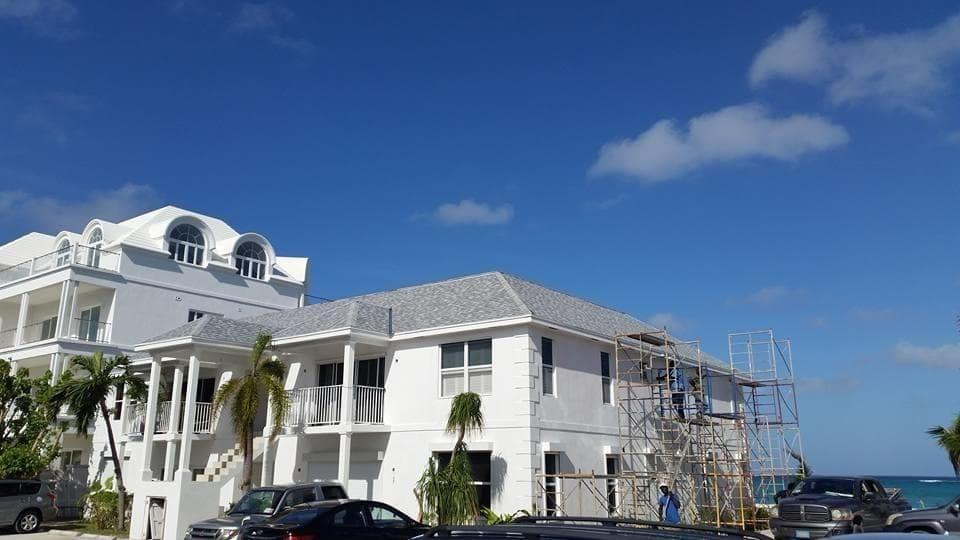
What sets our roofs apart
Cat-5 strapping
Hurricane clips, straps and ties spec'd to the wind-uplift load, not the minimum that scrapes inspection.
Metal, shingle, flat
Standing-seam metal, architectural shingle and flat membrane — the right system for the building.
Gutters & drainage
Roof, gutters and drainage detailed together so water leaves the building cleanly.
Managed by Taurus
Taurus manages the scope from inspection through closeout, so responsibility stays clear.
How a roof job runs
Inspect
We get on the roof, find the real cause of the leak or failure, and document it for you or your insurer.
Recommend
Repair or replace — we give you the honest call and a clear build quote, not a default to the bigger job.
Strip & strap
Tear off where needed, correct the strapping and decking, then install the new system to code+.
Seal & close out
Flashings, gutters and penetrations sealed, site cleared, and the site cleaned for closeout.
Roofing for the hurricane belt
A Bahamian roof needs more straps than a Florida one — that isn't a slogan, it's the wind-uplift reality of sitting in the Atlantic hurricane corridor. The connection between roof, wall and foundation is a continuous load path, and the weakest fastener decides what survives a Category 4 or 5.
Salt air adds the second problem: the wrong fasteners and flashings corrode within a few seasons. We choose materials rated for coastal exposure, strap to the uplift load, and detail the drainage so wind-driven rain doesn't find its way in. It's the unglamorous detail that keeps the ceiling dry for decades.
Frequently asked questions
Should I repair or replace my roof?
It depends on the roof's age, the extent of the damage and the state of the strapping underneath. We inspect, show you what we find, and give you an honest repair-or-replace recommendation rather than defaulting to the bigger job.
What's the best roof for a home in The Bahamas?
Standing-seam metal performs extremely well in the hurricane belt when it's properly clipped and strapped. Architectural shingle and flat membrane each have their place — we match the system to the building and budget.
Do you do emergency roof repairs after a storm?
Yes. We run a storm-response crew that can tarp-and-secure fast and document the damage for your insurer. See our hurricane-resistant construction page for storm rebuild work.
Is your roofing work to hurricane code?
Every Taurus roof is strapped and fastened to the Bahamas Building Code's wind-uplift spec — and typically above it.